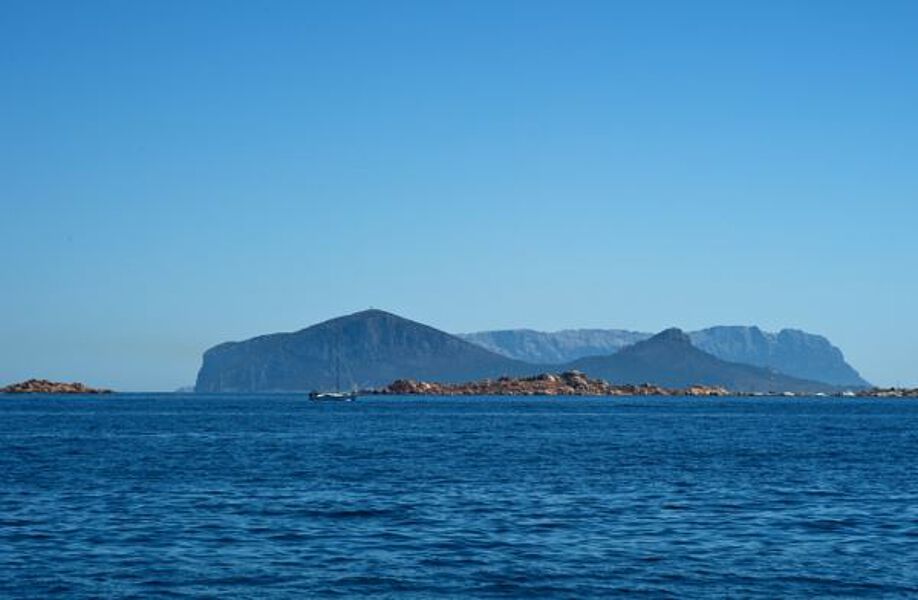

From Sardinia to Corsica
It was early morning in Sardinia when our plane touched down at Olbia airport. After a forty-five-minute drive, we reached Marina di Portisco — our charter base for the trip.
Handover of the boat went surprisingly quickly and was entirely professional, so we were able to set off for the Maddalena Archipelago that same day. Just short of the islands, though, the engine started overheating and we had to stop. After some searching, we found the culprit: a sheet of plastic had gotten sucked up against the engine's cooling water intake, cutting off the flow of seawater the pump needed. Clearing the plastic away was easy enough, but by then it was getting late, so we picked La Maddalena, the archipelago's main town, as our overnight stop. We found a spot in the town harbor without any trouble, and for dinner we ended up in a neighborhood mostly frequented by locals. The restaurant served excellent Sardinian food, and the bill for our meal was sensationally low.
The first real highlight of the trip came the very next day. We sailed through the Strait of Bonifacio toward the town of the same name on Corsica's south coast. About halfway across — a stretch that's no stranger to strong wind — we caught our first glimpse of the coastline and its dramatic cliffs. Wind speeds through the strait can run one or two steps higher on the Beaufort scale than the surrounding Mediterranean, and sure enough, we were making the crossing in a solid 20 to 25 knots. Before long we could make out the outline of the town itself, perched majestically atop the cliffs. The closer we got, the more it looked like a few of those houses might tumble straight into the sea at any moment.
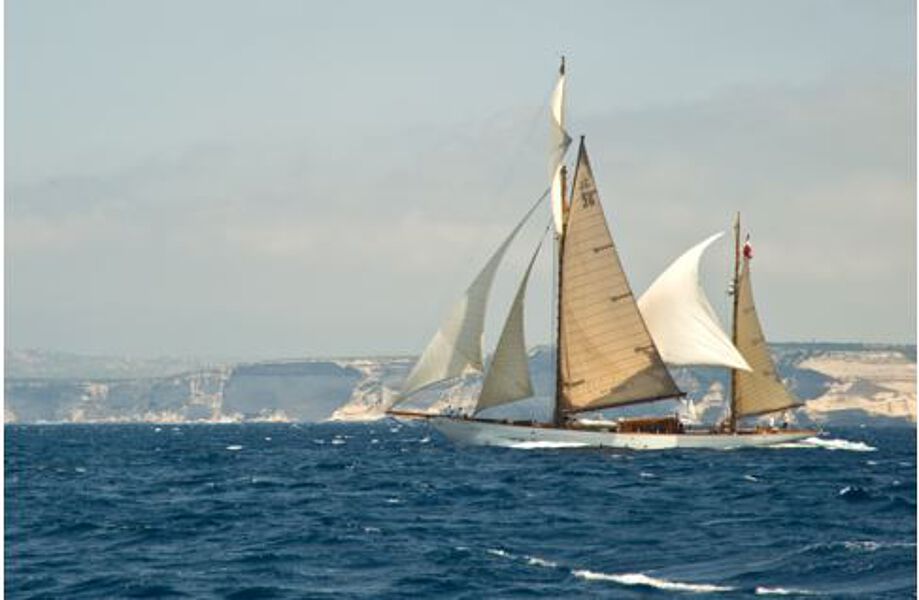
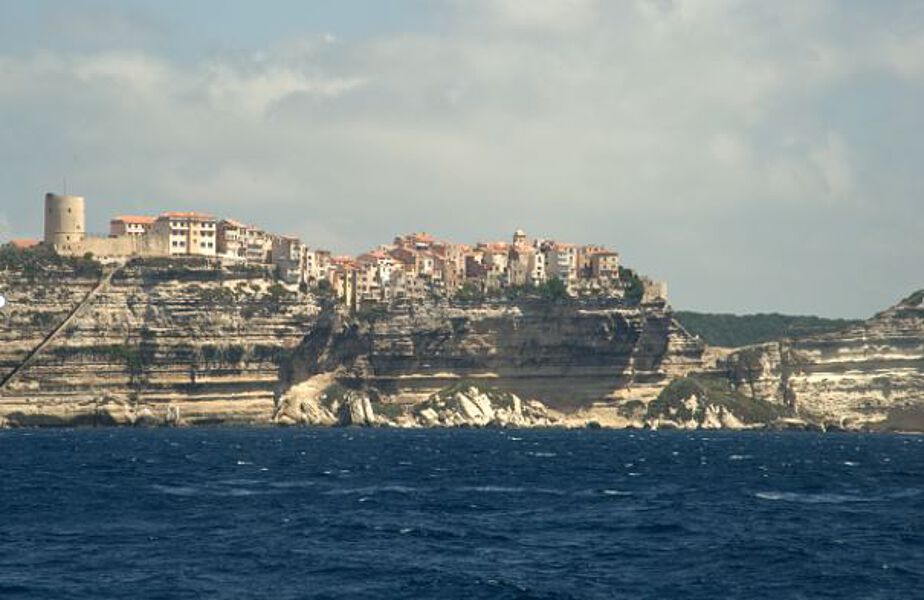
With very little room left in the town harbor, we opted to anchor in a small bay nearby instead — quieter anyway, and an easy dinghy ride from both the harbor and the town. The picturesque old town, perched on the cliffs above, is absolutely worth the visit: a Romanesque cathedral, a tangle of narrow streets, and jaw-dropping views out over the sea and the surrounding countryside. The Corsican coast holds its own on the food front, too.
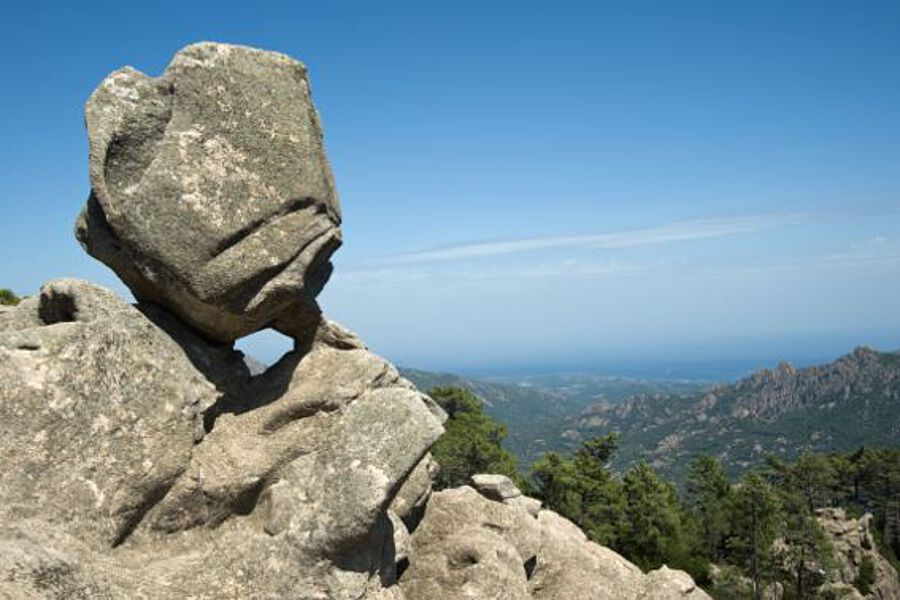
The next day was set aside for Corsica's mountains, protected by a nature park that stretches across nearly the entire island. Our route ran through L'Ospédale and past a beautifully situated reservoir near Agnarone, climbing into some truly striking terrain. Before long we left the rental car behind to hike through forest lined with jaw-droppingly bizarre granite formations. We ended at a granite massif with sweeping views across much of the island's southern half — an excursion good enough to already have us thinking about planning another trip back to Corsica.
Back in Bonifacio, we spent the evening revisiting the impressive old town and its inviting restaurants once more.
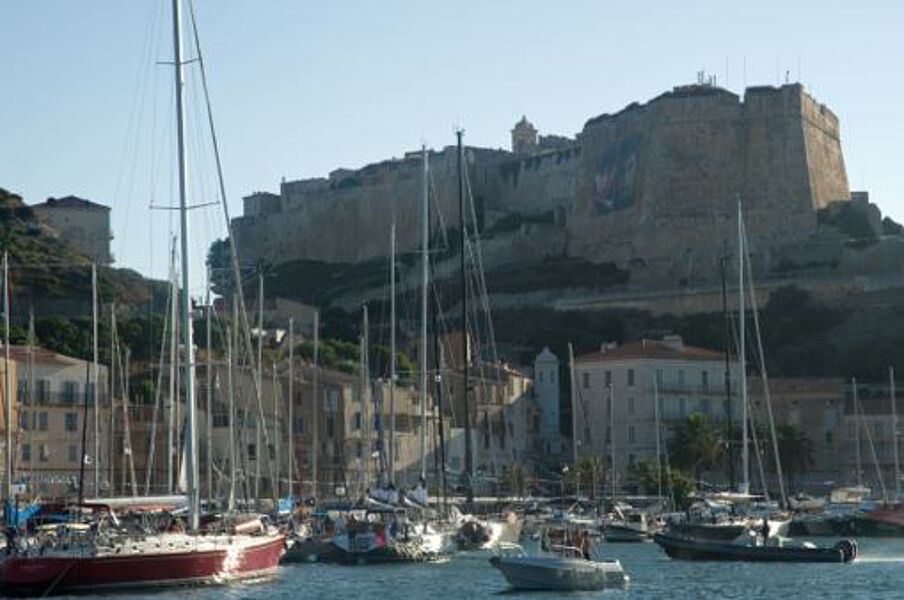
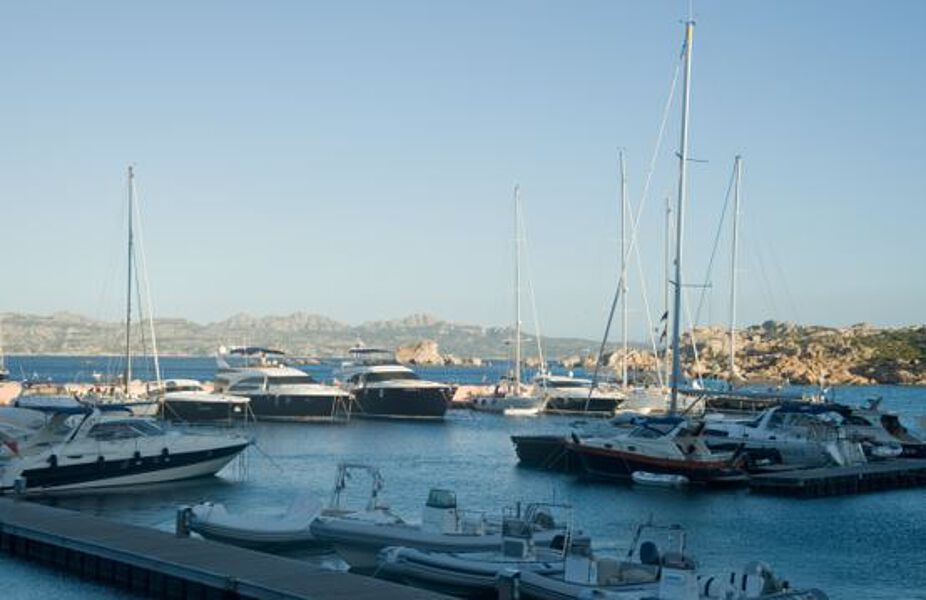
The next morning, as we left Corsica bound for Sardinia's west coast, the forecast called for 25 knots of wind. In the strait between the two islands, though, the southwesterly gusted up to 35 knots at times, and combined with a strong west-to-east current, beating to windward turned into hard work. So we opted for the far more comfortable downwind route instead and set a course for Marina Massimo in the Maddalena Archipelago. After three nights with no shore power or provisions, a stop to restock food, electricity, and water wasn't exactly a bad idea anyway. By 5 p.m. we'd tied up our Oceanis 50 in a harbor packed with luxury yachts.
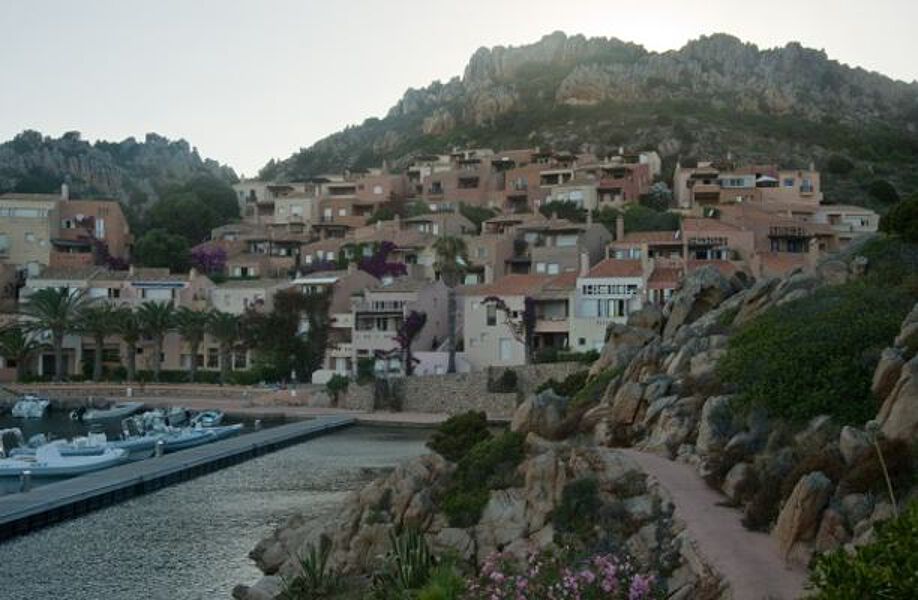
The marina sits in a beautiful, wide-open bay, and a small vacation-home development adds to its solid infrastructure. That said, both the berth fees and the excellent dinner we had didn't come cheap in July.
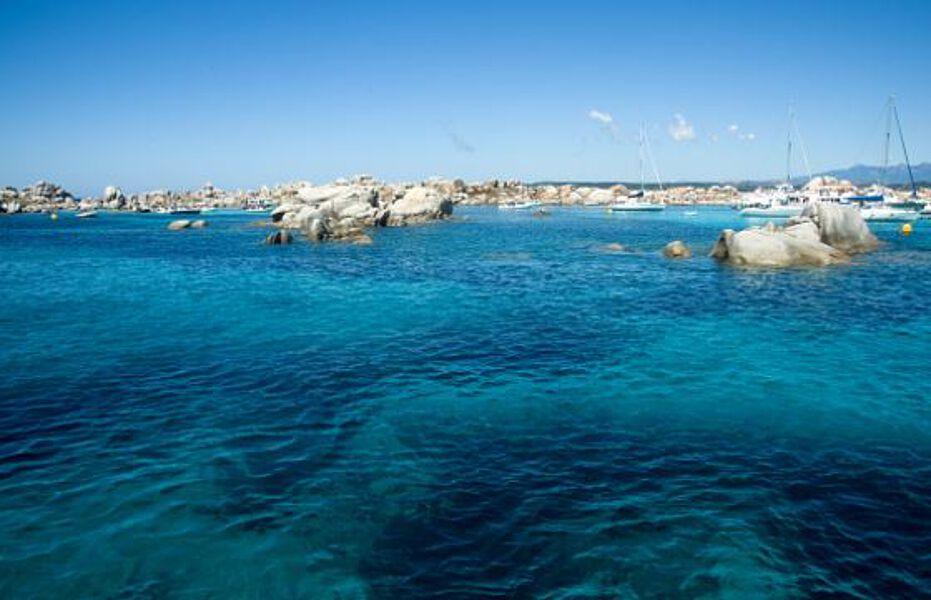
The next day we sailed to the Îles Lavezzi, a group of islands in southeastern Corsica that's absolutely worth the detour. We anchored in the stunning Cala Lazerina bay off Île de Cavallo, ringed with granite boulders rising straight out of the water and a scattering of tiny rocky islets. We ran a line ashore just to rule out any unpleasant surprises overnight. Besides swimming and snorkeling in the crystal-clear, azure water, the day's plan included a short hike through granite formations so bizarrely shaped that some genuinely looked like bears, birds of prey, or petrified giants. The rich, fragrant wild vegetation covering the islands is something we still haven't forgotten.
This small island is also home to two military cemeteries and a memorial to the dead from a major shipwreck involving a French three-masted vessel. Back in 1855, to save time getting supplies to the Crimean War, the decision was made to route the ship through the shorter Strait of Bonifacio rather than around the southern tip of Sardinia. On February 16, the ship — carrying over 700 men, including the general staff — was driven onto the reefs of the Lavezzi Islands by a storm and thick fog and broke apart. The French army still maintains the cemeteries here to this day. It remains the deadliest shipwreck in the history of the French navy in the Mediterranean.
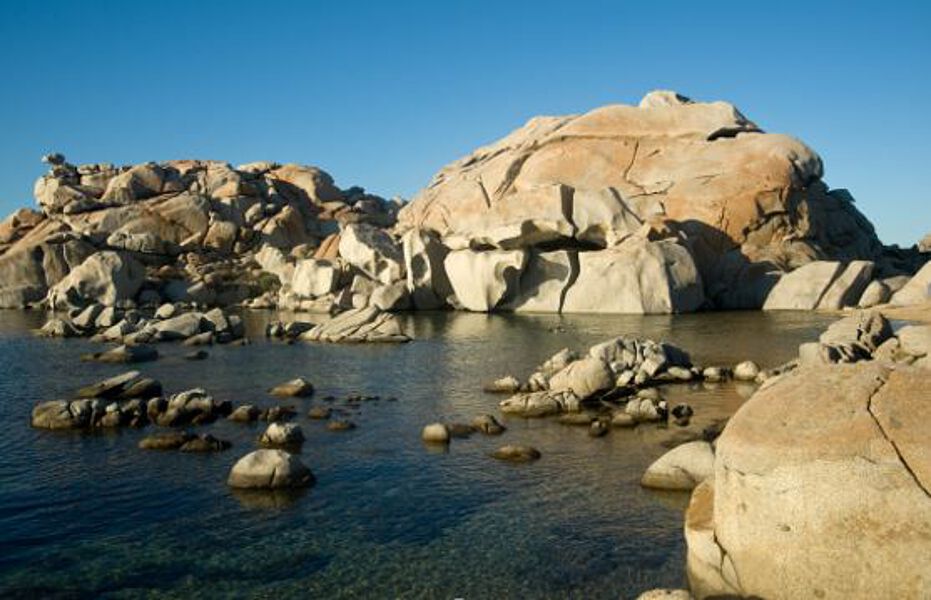
On the second-to-last day of our trip, we headed back into the Maddalena Archipelago to Isola Budelli, anchoring in a bay on the island's north side. That afternoon, scouting out a restaurant along this stretch of coast, we got quite the surprise: dinner would run us 600 euros per person — drinks not included. Given those numbers, we skipped the mooring buoy and had a relaxed dinner at anchor instead, right alongside a few luxury yachts. As it turned out, we'd have missed the evening's real highlight anyway if we'd gone ashore: dead-calm seas and a sky that shifted through soft pink, violet, and deep blue as the sun went down.
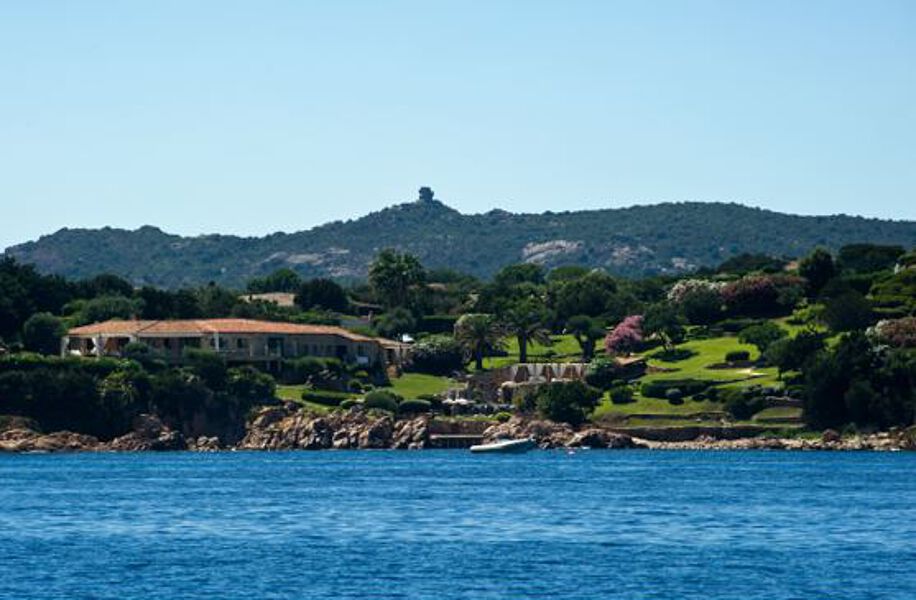
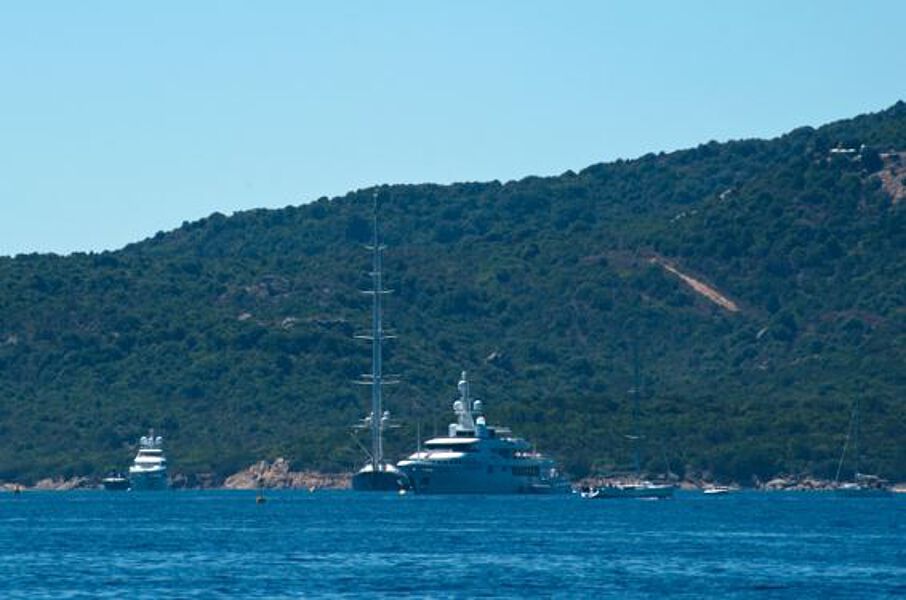
On our last day, the sail back to Olbia took us along the famous Costa Smeralda, past luxury villa after luxury villa and one dream yacht after another. We would gladly have taken another week to explore bays like Cala di Volpe or Porto Cervo, the resort town founded by Karim Aga Khan, to check out a few more restaurants, and above all to keep enjoying pane carasau, the wonderfully crisp Sardinian durum-wheat flatbread that had become our constant companion. If anything, the day only strengthened our resolve to come back to this gorgeous stretch of coastline.
The wonderful view of the island of Tavolara was the last thing we got to take in from the boat before reaching our final stop. After a handover just as smooth and professional as the pickup, a hearty, high-spirited dinner at Marina di Portisco brought this unforgettable trip to a close.